



Last updated on December 26th, 2025
Stepping into the world of eCommerce can feel like walking into a world filled with choices, plugins, and possibilities. When you decide to build your dream shop using the Magento eCommerce platform, you’re choosing a powerhouse with open-source flexibility. There is enormous scalability, and thousands of extensions waiting to be used. A Magento eCommerce store can grow with you, change with you, and outshine many competitors if you set it up with intention. But the journey has little nuances, hidden knobs, quiet switches you must know. And today, we unravel them in an absolutely simple way.
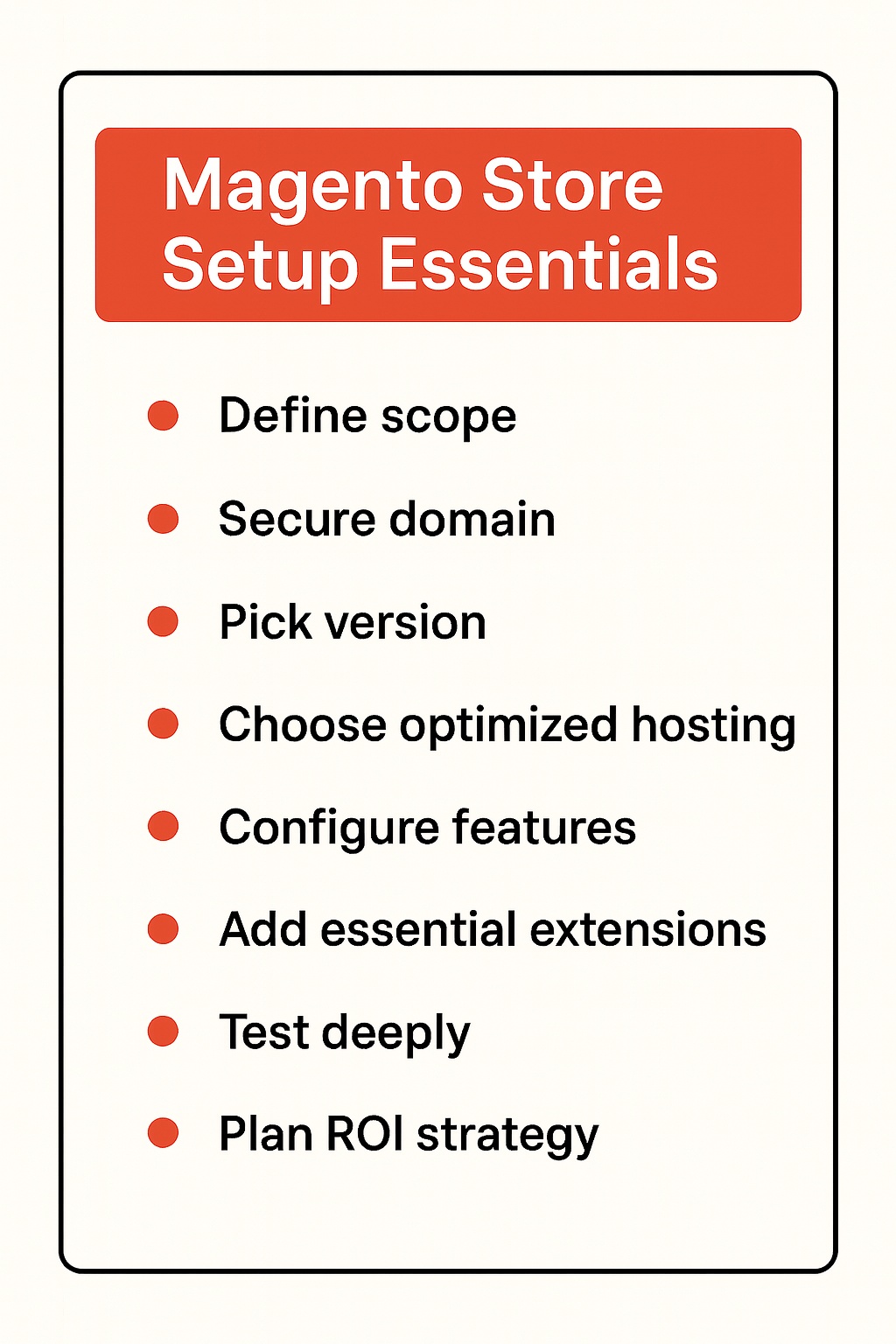
Table of Contents
Why Choose Magento?
The Magento eCommerce platform is a software where flexibility meets raw power. It helps users build online stores with structure, beauty, and customer-ready capabilities. Magento Open Source is free, mighty, and customizable. Adobe Commerce is its premium sibling. It hosts your store on Adobe’s strong servers while adding more features for enterprises.
A MaveneCommerce report notes that 202 retailers in the Internet Retailer Top 1000 rely on Magento. That’s impressive in the eCommerce jungle. The platform provides a full-fledged suite: SEO tools, catalog creation, product attributes, order management, shipping and payment options, and deep-level customization.
Out of the 170,000+ websites running on this system, yours could be the brightest one if you master how to optimize.

Best Practices for Magento
Let’s dive into the best practices that help you run a successful Magento eCommerce website with clarity.
1. Create a Work Scope
Just as builders need blueprints, so does your online store. Start by understanding what the Magento eCommerce solution offers natively. Learn what it can do before adding extras. This helps you decide what you need for launch and what can wait. Prepare a post-launch wishlist. It keeps the project cost-efficient.
2. Protect a Domain
Choose your domain early. You don’t want the heartbreak of discovering your domain.com has already been captured by someone else. Buy your domain before anything else and protect your brand identity from the beginning.
3. Pick a Magento Version
Magento Open Source is a popular, free choice with flexible options. Adobe Commerce (Enterprise), however, is better suited for large businesses expecting heavy revenue. This premium version includes advanced features and professional support. Pick the version that aligns with your growth goals and store scale.
4. Choose a Hosting Company for Magento eCommerce optimization
Magento is powerful, and powerful platforms demand equally strong hosting. You need servers optimized specifically for Magento eCommerce optimization. Managed hosting, though slightly more expensive, gives you security updates, hardware management, performance tuning, and backups on time. Look for scalability, high uptime, and 24/7 support.
5. Choose a Hosting Provider
Yes, this seems similar to the step above. You need a hosting provider who understands the rhythm of the Magento eCommerce platform. Bare-minimum hosting will frustrate you. Fully managed hosting will delight you. Pick a provider who can grow with your Magento eCommerce store.
6. Set Up Magento Features and Stock Your Store with Products
Magento’s backend lets you create categories, attributes, and product listings smoothly. Many features can be enabled globally, simplifying your workflow. Decide how many items appear per category page. Choose whether out-of-stock items remain visible. Configure shipping rates, payment gateways, sales taxes, and inventory options.
Turn on sitemaps. Enable Google Analytics. These small switches often make a big difference. Work with a development partner if you want deeper customizations inside your Magento eCommerce website.
7. Magento Add-Ons in the Magento eCommerce platform
Magento has thousands of extensions. They are beautiful and helpful, and occasionally disruptive. Choose wisely. More plugins do not mean more power. Install only what you need, and only from trusted developers with good reviews and dependable support, because stability is priceless.
8. Once Cut, Twice Measured
Test everything, and finally, test one more time. Visit every page. Register as a customer. Buy a product. Cancel it. Trigger an email. Submit a form. Your Magento eCommerce store must feel flawless before you open the digital doors.
9. Consider the Return on Investment
ROI doesn’t magically appear. You need consistent marketing energy. There should be SEO, PPC, email flows, content marketing, reviews, remarketing, social ads, influencer pushes, and feed optimization. Great stores aren’t born. They are nurtured, marketed, polished, and re-marketed.

FAQs
1. What should I prioritize when launching a Magento eCommerce store?
Focus on hosting, speed optimization, extensions, and clean product setups.
2. How many extensions are ideal for a Magento eCommerce website?
Only what you absolutely need. There are too many extensions that slow down the store and cause conflicts.
3. Is Magento eCommerce optimization needed after launch?
Yes. Magento requires ongoing optimization for speed, security, and performance.
4. Which Magento version is better for growing businesses?
Adobe Commerce works well for enterprises, while Open Source suits small and mid-sized brands.
5. How long does it take to optimize a Magento eCommerce solution?
It varies. Some stores take weeks; complex setups may take a few months.
Conclusion
A Magento eCommerce platform store can be a powerful asset for growth, if built with structure and steady foresight. From choosing your domain to refining performance through ongoing Magento eCommerce optimization, each step adds strength to your digital storefront. As you follow these best practices, your store becomes smoother, faster, and more customer-friendly. It becomes ready to face the ever-changing eCommerce battlefield.
If you’re looking for experts who understand Magento inside out, VserveeCommerce is your ideal partner. Our certified developers help you build, optimize, maintain, and scale your Magento eCommerce store with precision and creativity. Let our team transform your online presence into a high-performing eCommerce machine.
Contact Vserveecommerce today.
Suggested Reads
https://www.vserveeCommerce.com/blog/devops-and-testing-tools-for-magento-development/ – Tools that refine development speed and testing accuracy.
https://www.vserveeCommerce.com/blog/how-ai-magento-agencies-balance-automation-and-strategy/ – AI and strategy blending for smarter Magento workflows.
https://www.vserveeCommerce.com/blog/magento-website-crashing-high-traffic-events/ – Avoid crashes during major online traffic spikes.
https://www.vserveeCommerce.com/blog/custom-magento-development-guide/ – Deep insights into tailoring Magento for unique business needs.

