


Last updated on July 21st, 2026
Choosing the right BigCommerce development agency requires looking past general certifications to verify specialized industry experience, structured migration pathways, and composable framework capabilities. A qualified partner utilizes mid-market Open SaaS features to scale performance, handle multi-store configurations, and deploy AI commerce automation, reducing your platform’s Total Cost of Ownership (TCO) while preserving historical search engine value.
If your enterprise e-commerce platform requires manual code updates and constant plugin patches just to execute basic B2B pricing tier logic, your current infrastructure is restricting your market scale.
Deploying an optimized BigCommerce web development strategy eliminates these digital bottlenecks. A structured development plan aligns complex back-office data, accelerates page speed metrics across mobile touchpoints, and guides high-intent buyers straight to checkout.
This practical evaluation guide maps out the core selection benchmarks, critical platform migration vulnerabilities, and advanced AI automation capabilities your partner must possess. You will gain a clear blueprint to assess candidates and confidently select a team that supports long-term growth.
If you are ready to remove operational friction, integrate your ERP systems, and deploy scalable headless structures, reach out to our specialist engineering team at Vserve Solutions for an enterprise system audit.
Table of Contents
What Does a BigCommerce Agency Do?
Why Industry Experience Matters More Than Generic Expertise
Evaluating an Agency’s Migration Expertise
AI and Automation Capabilities to Look for in a Modern Partner
Other Factors to Consider When Choosing a BigCommerce Agency
What Does a BigCommerce Agency Do?
A specialized BigCommerce development agency designs, builds, and optimizes digital storefronts to maximize transaction volumes. Unlike general web design teams, these specialized engineering groups manage the complex configurations required for modern enterprise commerce:
- Store Design and Development: Building responsive, fast storefronts using the Stencil theme framework or advanced headless architectures via Next.js Catalyst.
- Custom App Development: Coding proprietary internal applications using BigCommerce’s open APIs to solve unique operational requirements.
- Systems Integration: Building automated data flows between your storefront and essential back-office systems (ERP, PIM, CRM, and accounting portals).
- Migration Services: Safely transferring structural assets, customer historical entries, and deep catalog schemas from legacy databases.
- Ongoing Support and Optimization: Continuous conversion rate optimization (CRO), page speed maintenance, and feature enhancements.
Mid-market and enterprise organizations generally seek out specialized BigCommerce website developers when launching major initiatives. This includes replatforming away from limiting legacy systems, expanding into global multi-storefront (MSF) markets, or automating complex B2B procurement pipelines that require seamless integration with internal supply chains.
Why Industry Experience Matters More Than Generic BigCommerce Expertise
Generic platform knowledge is no longer sufficient to scale an enterprise brand. Your chosen engineering group must understand the specific data relationships, user design patterns, and operational logic unique to your industry niche:
- B2B Wholesale and Distribution: Your partner must excel at configuring custom, account-specific price lists, multi-tier corporate customer hierarchies, volume-based bulk ordering grids, and real-time ERP credit limit verifications.
- Manufacturing: Requires deep familiarity with complex nested product configurators, large-scale catalog structures with thousands of component SKUs, and secure dealer lookup portals.
- Fashion and Apparel: Demands complex multi-attribute variant management, visual swatch configurations, and live omnichannel inventory synchronization across regional retail points.
- Health & Wellness: Requires advanced subscription billing architectures, complex logic for recurring shipments, and strict data security compliance tracking.
Questions to Ask About Industry Experience
When interviewing prospective development teams, request specific case studies detailing identical B2B or B2C project deployments. Inquire about the exact industry-specific APIs they used, how they resolved complex multi-location inventory challenges, and if they have proven templates for your sector’s distinct operational model.
Unlock native multi-storefront scaling and AI-driven checkout automation using advanced BigCommerce web development strategies.
Evaluating a BigCommerce Agency’s Migration Expertise
Replatforming is a complex operational shift. Moving your entire storefront to BigCommerce requires careful data mapping to ensure absolute data accuracy, secure customer password transfers, and complete backend integration continuity. A single misconfigured database field can corrupt your order tracking records or disrupt your internal fulfillment workflows.
Common Migration Sources
- Shopify to BigCommerce: Executed to unlock advanced multi-storefront capabilities and escape restrictive variant limitations.
- Magento to BigCommerce: Chosen by brands looking to eliminate high server maintenance overhead and move to a secure, open SaaS model.
- WooCommerce to BigCommerce: Designed to replace unstable, plugin-dependent setups with enterprise-grade platform infrastructure.
- Salesforce Commerce Cloud to BigCommerce: Deployed to drastically lower Total Cost of Ownership (TCO) while retaining robust API flexibility.
Common Migration Pitfalls to Avoid
The single greatest hazard during an upgrade is losing your organic search engine equity. If an agency shifts your URL paths without building a detailed redirection map, your search presence can disappear overnight. To safeguard your visibility, your development team must implement structural 10 ecommerce SEO Services protocols to maintain your hard-earned rankings throughout production go-live phases.
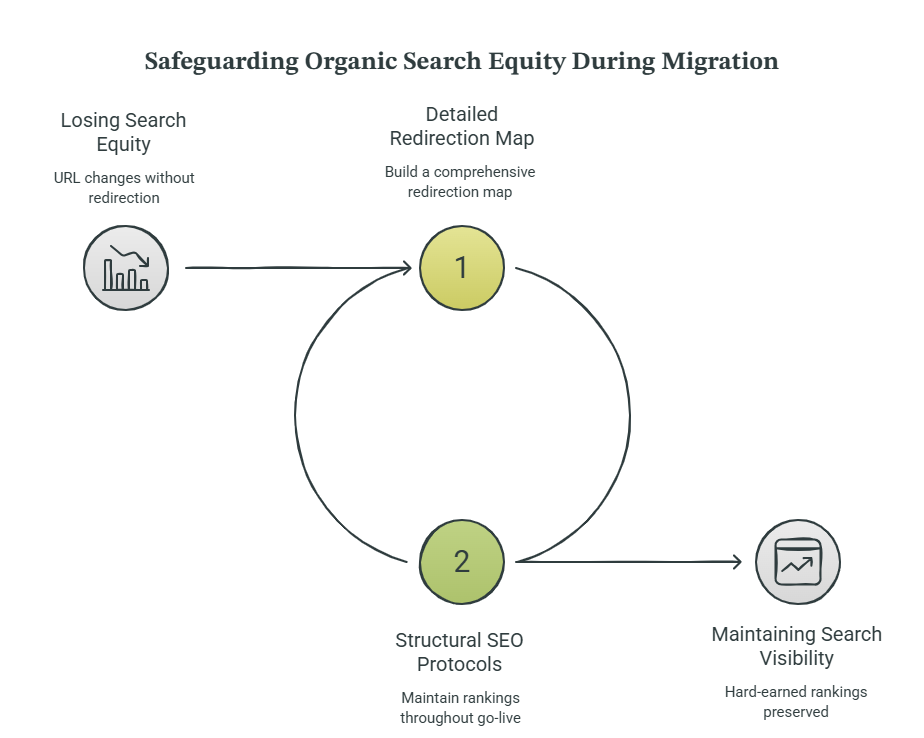
Before signing a contract, ensure your agency provides a comprehensive, written data migration plan. This blueprint must explicitly define their database field-mapping processes, validation environments, multi-device quality assurance testing procedures, and structured rollback protocols in the event of production deployment anomalies.
AI and Automation Capabilities to Look for in a Modern Partner
Modern BigCommerce web development goes far beyond basic template design; it involves engineering an intelligent, automated shopping ecosystem. Forward-thinking brands utilize machine learning models to analyze consumer behavioral data in real time, helping them lower operational costs and increase average order value (AOV).
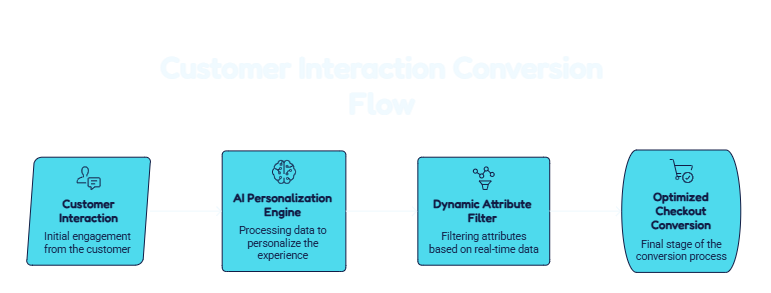
Your development partner should be fully capable of integrating advanced AI-powered tools natively into your BigCommerce architecture. This includes setting up automated product categorization frameworks, deploying semantic search tools that understand conversational buyer intent, and building predictive inventory management systems to minimize stockout risks. Furthermore, they can implement sophisticated top 8 chat support services to resolve tracking requests instantly, which helps reduce cart abandonment by up to 35%.
Other Factors to Consider When Choosing a BigCommerce Agency
- Technical Certifications: Verify that their engineers hold official BigDev certifications and have direct experience with BigCommerce’s B2B Edition and modern headless primitives.
- Integration Capabilities: Ensure they have a proven track record of connecting core platform APIs with complex enterprise resource planning (ERP) suites like NetSuite, SAP, or Microsoft Dynamics.
- Support and Maintenance: Confirm they offer clear Service Level Agreements (SLAs) providing reliable technical monitoring well past your launch date.
Conclusion
Selecting a BigCommerce development agency is a foundational decision that directly shapes your brand’s operational speed, transactional security, and long-term scalability. Partnering with an engineering group that understands your industry’s specific challenges reduces project implementation risk and ensures your system architecture supports your business goals from day one.
Choosing an execution partner with deep platform expertise is the definitive factor in ensuring an efficient launch. If you are ready to modernize your e-commerce platform and build a high-performance system designed for scale, connect with the certified engineers at Vserve Solutions to map out your BigCommerce strategy today.
FAQs
1. What is the typical timeline for an enterprise BigCommerce storefront build?
A standard custom implementation using the Stencil framework generally averages between 10 and 18 weeks. For complex enterprise builds featuring headless architectures or deep ERP integrations, project timelines typically span 16 to 24 weeks. This duration includes comprehensive data cleaning, system architecture mapping, and rigorous staging validation.
2. Can we migrate our current design layout exactly as it is from Shopify to BigCommerce?
While your brand assets, color styles, and core UX structures can be accurately recreated, the underlying code framework must be entirely rebuilt. BigCommerce uses modern templating engines designed to deliver superior page speed, requiring your team to adapt elements into an optimized architecture.
3. How do specialized agencies prevent search engine ranking losses during a platform migration?
Protection is achieved by maintaining exact structural data continuity. Developers create a comprehensive 301 redirect matrix matching old URL extensions to new paths, preserve historical metadata fields, and use proper canonical configurations. This prevents indexing errors, helping you retain your search visibility during launch.
4. Why is BigCommerce often preferred over alternative architectures for B2B operations?
The platform features deep, native B2B functionality that scales efficiently without relying on unstable third-party applications. Its open SaaS model handles complex customer group pricing rules, multi-tiered accounts, and deep product taxonomies out of the box, reducing technical overhead while maintaining excellent performance.